D&D Gifts That Bring the Adventure Beyond the Table
Five gifts for D&D players, from a toothy Mimic dice pouch and tiny metal dice to a transforming Beholder, campaign journal and fantasy cookbook.
Giftlify Editorial TeamPublished · 5 min read
A D&D player can be shopping for an imaginary character while you are trying to shop for a very real person. The safest route is to notice what they enjoy about the table: the props, the stories, the careful notes, the snacks or the pleasure of producing one more set of dice.
These gifts for D&D players focus on objects that feel fun to unwrap and useful or enjoyable between sessions. They come from researched Amazon US listings, with real product photographs. We have not tested them ourselves, and we have avoided assuming that every player wants a new rulebook or a large miniature collection.
| Who you are buying for | Start with | Check before buying |
|---|---|---|
| Collects tiny dice and fantasy accessories | Pocket-Watch Dice Case with Mini Metal Dice | The dice are only 6 mm; prioritize the exact contents over the watch-style appearance. |
| Likes collectible figures and playful desk objects | Dicelings — Blue Beholder | This is a transforming toy, not a balanced die for deciding game outcomes. |
| Loves cooking for their gaming group | Heroes’ Feast: The Official D&D Cookbook | Check dietary preferences and whether a cookbook is welcome. |
| Enjoys a useful object with an unmistakable D&D joke | Mimic Gamer Pouch | The pictured dice illustrate storage and are not included with the pouch. |
| Keeps paper notes during a campaign | The RPG Character Journal | Check the included character-sheet format against the rules they use. |
1. A little prop with a whole adventure inside
The Galdor’s Guild pocket-watch-style dice case and mini metal dice set has the appeal of a small object a character might produce from a coat pocket. The antiqued metal finish, chain and miniature polyhedral dice make it a particularly evocative gift for someone who enjoys physical props.
The dice are only 6 mm, which is a large part of the novelty and also the main practical limitation. Tiny numerals are harder to read, and small dice are easier to misplace. Choose this for a collector or a player who enjoys an unusual travel set rather than someone who needs large, clear everyday dice.
Check the exact listing contents before buying and do not choose it primarily as a conventional timepiece. Its gift appeal is the compact fantasy accessory and miniature dice. It can make a lovely small present for a player who likes arriving at the table with something unexpected.
2. A monster hiding in a die
The D&D Dicelings Blue Beholder turns a familiar twenty-sided shape into a little monster. It is a straightforward, enjoyable idea for someone who likes the visual world of the game and would appreciate a small object beside their keyboard or campaign notes.
This is a collectible transforming toy, not a balanced playing die. That distinction matters: it belongs on the desk or in a collection rather than being bought as a replacement for the dice used to resolve a game.
It is a good option when you know the person enjoys D&D but do not know their character class, preferred rules edition or miniature scale. You can choose a recognizable creature without guessing at technical game requirements. Keep the packaging if the recipient likes collecting figures, or wrap it with a short, silly encounter description for a more personal reveal.
3. A feast for the people behind the characters
Heroes’ Feast: The Official D&D Cookbook is a particularly good gift for the player whose contribution to a session includes feeding everyone. It gives the fantasy setting a place in the kitchen and turns the pre-game meal into part of the occasion.
Choose it for someone who enjoys cooking, hosting or planning a themed evening. It is less suitable for a player who loves the game but sees meal preparation as an unwelcome task. The connection to their real interests matters as much as the branding.
A cookbook also avoids many of the compatibility questions that come with buying game supplements. There is no need to know which campaign they are running to enjoy preparing food together. Check dietary preferences, then offer to cook a recipe with them or contribute ingredients to a group dinner. The present can be as much about the people at the table as the adventure on it.
4. A treasure chest with suspicious intentions
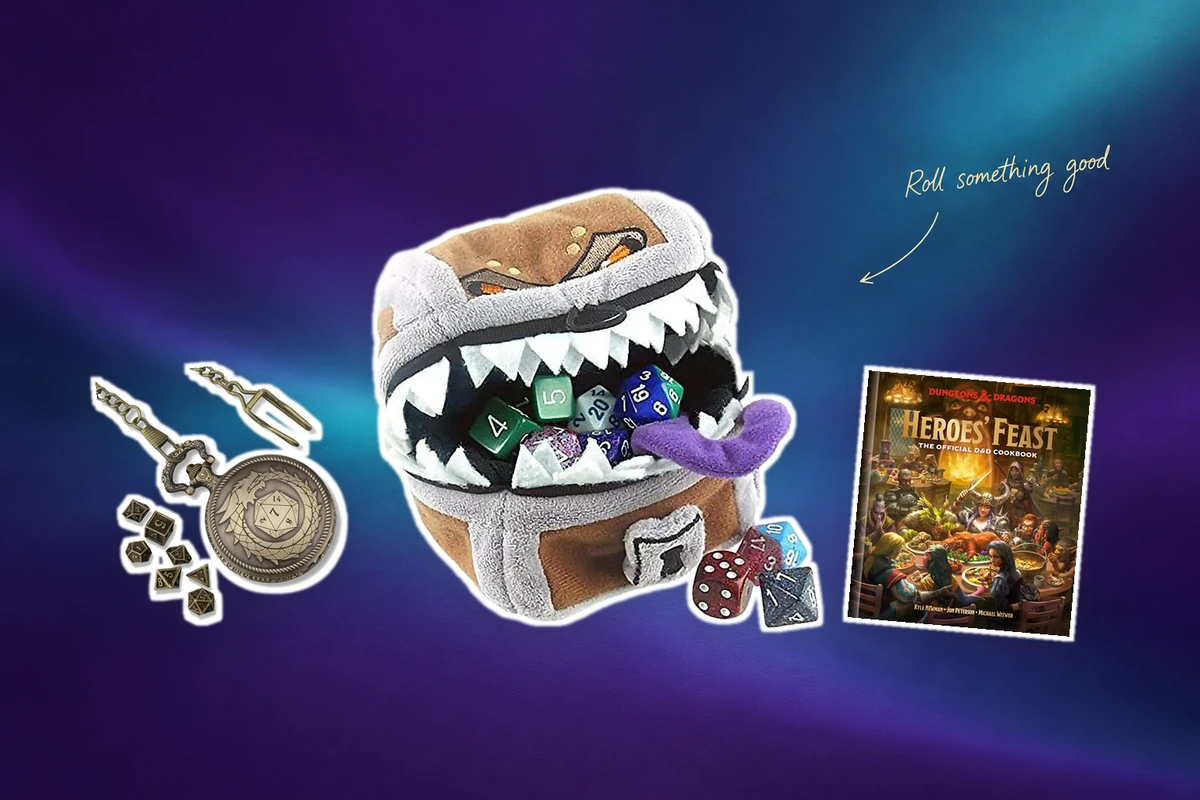
The Ultra PRO Mimic Gamer Pouch is the central character of our cover. A treasure chest with teeth and a purple tongue is already a joke D&D players will recognize, and making it a pouch gives the creature a useful job between encounters.
It is a strong gift for someone who carries dice, tokens or small gaming accessories and likes a bit of personality in their kit. The soft form makes it feel more like a little companion than a plain storage bag.
The dice in the photograph demonstrate how the pouch can be used; they are not part of the selected pouch purchase. Check the dimensions against what the recipient wants to carry. This is the playful choice for someone who would smile at a familiar monster guarding their equipment, particularly if they already have more dice than they can reasonably claim to need.
5. A place for the details everyone else forgets
A physical RPG Character Journal suits the player who remembers names, draws little maps and keeps track of promises made several sessions ago. The decorative cover gives the notebook a sense of occasion while the pages can become a record of an ongoing story.
The linked journal includes material arranged around fifth-edition characters, so check its sheet format against the version and style of game the recipient plays. A title mentioning 5e does not mean every printed field automatically matches every later revision or house rule.
Choose it for someone who prefers paper to a fully digital character setup. If they already use a detailed digital system, a more general accessory may be better. The most thoughtful addition is a first-page message about a memorable shared session, while leaving the rest of the journal entirely theirs to organize.
A final thought before choosing
For a playful gift with broad appeal, start with the Mimic pouch or Beholder. The tiny dice set suits a collector, the journal suits a note keeper, and Heroes’ Feast suits the person who loves feeding the group. Knowing their role in the real-life gathering is often more useful than knowing their character’s level.
Happy gifting← Back to all stories